

The Comparison Machine
The happiest decisions I’ve made in life looked like setbacks when measured by the wrong scorecard.

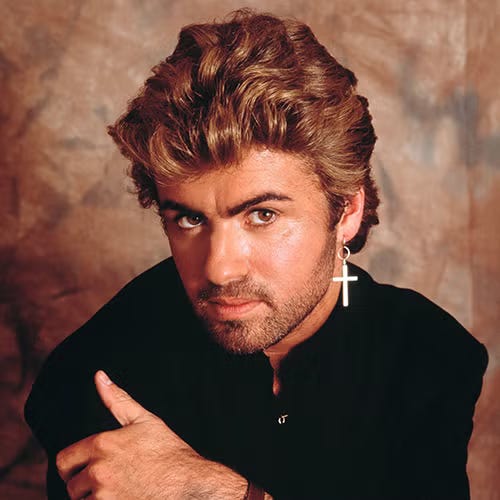
I’ve always been fascinated by George Michael’s story.
Not because he became famous. Plenty of people become famous. What interested me was what happened after he achieved everything he was supposed to want.
Commercial success. Wealth. Recognition. Global celebrity. By almost any external measure, he had won. Yet much of his later career was spent fighting for something else entirely: the freedom to make choices on his own terms rather than according to someone else’s expectations.
I’ve been thinking about that lately because comparison often works the same way. Many of us spend years chasing goals that look successful from the outside without ever stopping to ask who created the scoreboard we’re trying to win.
I’ve spent much of my professional life around ambitious people.
That isn’t a criticism. Ambition builds companies, creates opportunities, and pushes people to achieve things they once thought impossible. Much of what I’ve accomplished in my career came from setting goals, measuring progress, and wanting to improve. But spending decades in highly achievement-oriented environments teaches you something else.
Comparison has no finish line.
For most of my life, I assumed comparison was simply part of success. You looked at people a little further ahead, learned from them, and used their accomplishments as motivation. There is some truth in that. Comparison can help us grow.
The problem is that comparison rarely stays in its lane. What begins as motivation can quietly become a way of evaluating your entire life. And the scoreboard never stops moving.
Years ago, I left a job where I had a unique role, significant influence, and the ability to shape decisions. The company was entrepreneurial, fast-moving, and creative. When an opportunity came along to join a well-known software company, it seemed like the obvious next step. The company was larger, more recognizable, and carried a level of prestige that appealed to me.
From the outside, it looked like progress. Inside, it felt very different.
I quickly discovered that my role was similar to dozens of others. Decision-making authority was limited. The culture was highly bureaucratic and often focused more on reviewing past decisions than creating new opportunities.
I had achieved something I thought I wanted. And I was bored.
At the time, I assumed the answer was another professional move. A better role. A more interesting challenge. A different company. What I eventually realized was that I wasn’t looking for a new job. I was looking for a new life.
So I left the city I was living in and moved. The decision wasn’t primarily about career advancement. It was about changing my environment, my routines, and the way I was living. Ironically, the job I took was less prestigious than the one I left behind. On paper, it probably looked like a step backward.
In reality, it turned out to be one of the best decisions I ever made.
I worked fewer hours. I traveled less. I earned more money. I had more control over my time. My quality of life improved dramatically. I loved the city I was living in. Professionally, I wasn’t climbing as aggressively as before. But personally, I was far happier. That experience taught me something I wish I had understood earlier.
Some of the happiest decisions I’ve made in life looked like setbacks when measured by the wrong scoreboard. The older I get, the more I realize how often comparison encourages us to pursue things that don’t actually align with what we value.
One of the things nobody tells you about comparison is that it survives success.
We tend to imagine comparison as a problem of scarcity. If I just earned more, achieved more, owned more, or accomplished more, the comparisons would stop. In my experience, they simply evolve. The person striving for a promotion compares salaries. The executive compares titles. The entrepreneur compares exits. The retiree compares lifestyles. The target moves, but the mechanism remains remarkably consistent.
A few months ago, I listened to Jonathan Rauch’s book The Happiness Curve. One of the ideas that stayed with me was that many people experience a decline in life satisfaction during midlife followed by a gradual improvement as they age. The theory isn’t that life becomes easier. It’s that some of the ambitions, expectations, and comparisons that dominate earlier decades begin to loosen their grip.
According to Jonathan, this is a universal pattern, and I recognized parts of myself in it. Looking back, I can see how much of my adult life was spent pursuing goals that always seemed to move just beyond reach. Every achievement quickly became the baseline for the next one. Every milestone introduced a new comparison group.
Success didn’t stop the comparison. It often expanded it. I still catch myself doing it.
When I was much younger, a friend in New York asked me to help start a company. For a variety of reasons, I chose not to. The company eventually became extremely successful. Every now and then, I find myself wondering what would have happened if I had said yes. What would my career have looked like? Would my life have turned out differently? Would I have achieved more? Most of us have some version of this story.
The challenge is that comparison isn’t limited to other people. We also compare ourselves to alternate versions of our own lives—the careers we didn’t pursue, the opportunities we passed on, and the decisions we wish we could revisit.
Those comparisons can be especially seductive because they can never be disproven. The imagined life almost always looks cleaner and more successful than the one we actually lived.
Retirement has introduced its own version of this lesson. I’ve worked hard throughout my life and saved enough to enjoy this stage comfortably. Yet I have friends who accumulated far more wealth than I did. They travel more frequently. They stay in luxury hotels. They spend months moving between destinations that I would never realistically choose—or afford—in the same way.
There are moments when I notice the comparison instinct activating. A different itinerary. A larger home. A more luxurious experience. The comparison machine immediately starts calculating. Could I have done more? Should I have worked longer? Should I have accumulated more?
The remarkable thing is how quickly abundance can start feeling inadequate when viewed through someone else’s lens. Comparison has that effect. It turns gratitude into evaluation. Contentment into measurement. Enough into something slightly less than enough.
I don’t think comparison ever fully disappears. It’s woven too deeply into how we make sense of ourselves and our place in the world. The goal, at least for me, is no longer to eliminate it. The goal is to recognize it. To notice when I’m using someone else’s scoreboard to evaluate a life they aren’t living.
The older I get, the less interested I am in winning someone else’s race. Most of the time I can’t even tell if it’s a race I would have chosen for myself. That doesn’t mean I’m immune to comparison. Far from it. It simply means I’m trying to notice when it quietly takes control of the scoreboard.
Lately, I’ve become more interested in a different question: What would my life look like if I evaluated it on its own terms? Some of the happiest decisions I’ve made in life looked like setbacks when measured by the wrong scoreboard.
If these kinds of reflections resonate with you, consider subscribing to Past the Noise. I’ll continue exploring the ideas, assumptions, and questions that become more interesting with age—not because I’ve found the answers, but because I’ve become more curious about the right questions.
I'm finally experiencing this: "some of the ambitions, expectations, and comparisons that dominate earlier decades begin to loosen their grip." And you're spot on about comparing yourself with your imagined life. That's what I ruminate about, and it's not even real!
But there's hope when you say this: What would my life look like if I evaluated it on its own terms? Some of the happiest decisions I’ve made in life looked like setbacks when measured by the wrong scoreboard.
Years ago I had an opportunity to interview at another agency. It paid twice as much, but I knew that I would have to work twice as hard for a glass half full. I probably would've been out after two years. I'm glad that I didn't pursue it. I never would've met you!
He is a great guy, he’s my son!